
Texas Holdem Poker & Blackjack
Murka Games LimitedCard
4.514.78K Reviews
- Version
- 2.31.0
- Installs
- 1.00M
- Age Rating
- Mature 17+
Screenshots
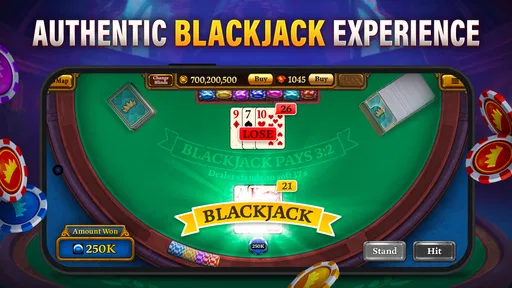


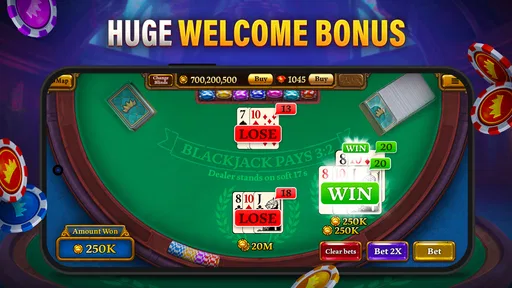
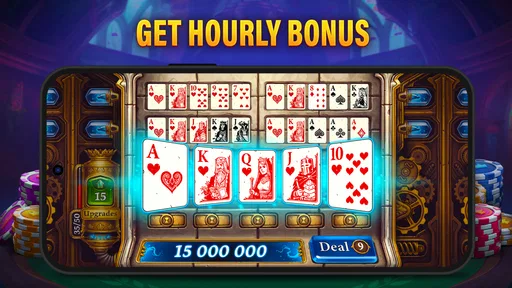
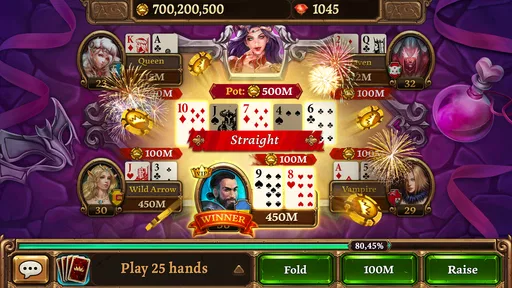
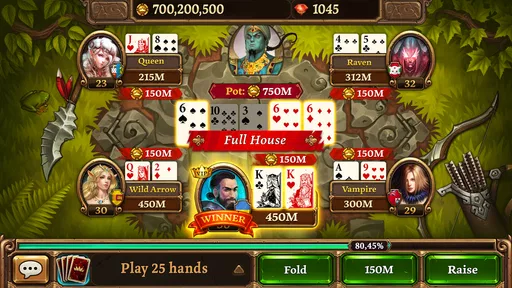
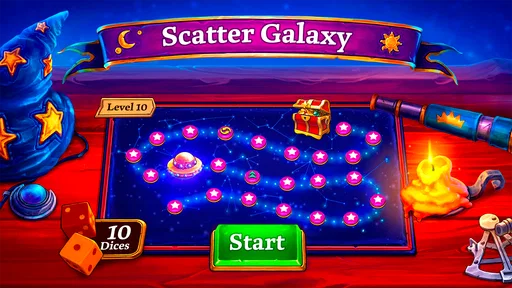
Our Review of Texas Holdem Poker & Blackjack
 Analysis by Appyee
I found Texas Holdem Poker & Blackjack most interesting as a shared-device card game rather than as something I would hand to every person in the house without a second thought. It combines Texas Hold’em poker with blackjack, and its main appeal is easy to understand: you can sit down for a short session, make decisions quickly, and keep progressing through a large collection of poker missions. In my experience, that makes it a convenient choice when someone wants a casual card game with more structure than a single endless table.
The game is developed by Murka Games Limited, and it has built a sizeable audience since its release on July 31, 2017. Its average rating sits at 4.5 from roughly 79 thousand ratings, with about 15 thousand written reviews and more than a million installs. Those figures do not tell me whether every player will enjoy its style, but they do suggest that it has remained visible and playable for a long time instead of being a short-lived card experiment.
What I like most is that it feels designed for repeated, bite-sized visits. What gives me pause is the combination of mature content, virtual-chip progression, and in-app purchases that range from $0.99 to $299.99 per item. That combination matters much more when a phone or tablet is shared, because the person playing and the person controlling purchases may not be the same.
How it works when a household shares one device
A realistic use case is a tablet left in a living room. One adult plays a few poker missions after dinner, another person opens the game later, and a teenager notices the familiar card-table presentation while browsing the device. The basic handoff is simple enough: the next player can see that this is a poker and blackjack game, but the device itself does not automatically explain whose progress, chips, or decisions belong to whom. I would treat it as a personal game that happens to be available on a common screen, not as a family board game.
That distinction affects how I would use it. If I were passing a tablet around casually, I would finish a mission before handing it over and avoid leaving the game open at a purchase screen. I would also make sure the next player knows whether the current session is mine or theirs. This is not a criticism of the card mechanics; it is simply practical housekeeping for any progression-based game on a shared device.
The mission structure gives a shared session a natural stopping point. Instead of asking someone to leave in the middle of an undefined run, I can play until the current objective is complete and then put the device down. That is one of the less obvious strengths here: short missions make the game easier to fit around ordinary household routines. It works better for a quick break than for a long, uninterrupted evening where everyone expects a traditional multiplayer table.
The social wording around playing with friends may also create the wrong expectation if you are looking for a face-to-face card night. I would not compare this directly with dealing physical cards across a kitchen table. A real deck supports conversation, bluffing, and house rules in a way a mobile game cannot reproduce. This title is better suited to individual turns and personal progression, even when people nearby are watching or taking turns with the device.
What I would check before letting someone else play
My first check would be the age context. The game carries a Mature 17+ content rating, so I would not treat it as a child-friendly substitute for a simple solitaire or family card app. The presence of poker and blackjack is already enough reason to keep it separate from younger players, especially when the device is shared and the game is easy to open from a recent-apps list.
My second check would be the purchase environment. The game is free to download, which lowers the barrier to trying it, but free access does not mean every part of the experience is financially neutral. Since individual in-app purchases can reach $299.99, I would keep purchasing decisions with the device owner and avoid assuming that a younger or less experienced user understands the difference between virtual chips and real spending.
I would also start with a clear agreement about whose progress is being used. If two adults both want to play, taking turns inside one open session can become confusing. One person may spend chips or advance a mission that the other wanted to handle. The safest routine is straightforward: one player completes a defined session, closes the game, and the next player begins only after confirming that the previous turn is finished.
That routine is more useful than trying to invent family rules the game may not provide. I would not promise separate profiles, child locks, or household management tools unless I had personally seen them in the installed version. Instead, I would rely on the device owner’s existing account and purchase safeguards, plus clear communication between the people sharing it. For a shared device, boundaries outside the game are more important than assumptions about the game itself.
Keeping turns and expectations clear
Coordination works best when everyone agrees on what “a turn” means. In this game, I would define it as one mission, one planned session, or a set amount of play time rather than an open-ended promise. That avoids the awkward moment when someone says they are finished but still wants to continue because another table or objective has appeared.
I would also avoid treating the displayed chip balance as a household score. Virtual chips are part of the game’s progression, not a shared budget and not a measure of who is the better real-world card player. If one person plays more often, their balance and progress will naturally look different. Making that distinction early prevents unnecessary arguments, particularly when children are watching adults play or when several people use the same tablet.
The store summary mentions a large chip grant, described as 60 million chips. I see that as part of the game’s invitation to get started, not as a reason to assume that chips will always feel unlimited. A new player may enjoy the generous opening impression, while a regular player may become more conscious of how progression and spending interact. I would explain that chips are game resources and keep real-money choices separate from friendly competition.
Another useful habit is to avoid handing the device over while a player is distracted. Poker decisions can be quick, and blackjack choices are easy to make without fully noticing what is on screen. If someone else is going to take over, I would wait until the current decision is resolved. That protects the original player’s strategy and makes the shared session feel cooperative instead of accidental.
For adults sharing a device, a simple spoken handoff is enough: say who is playing, what the current goal is, and whether purchases are off limits. That may sound excessive for a card game, but it is exactly the kind of small routine that prevents confusion when a free-to-play title is used by more than one person.
The difference between poker missions and ordinary card apps
Compared with a basic solitaire app, Texas Holdem Poker & Blackjack is more eventful. Solitaire is usually about arranging cards at your own pace, with little pressure to understand betting decisions or table situations. Here, the poker focus asks me to think about hands, timing, and risk, while blackjack provides a different rhythm based on whether to take another card or stand. That variety helps when I want more involvement than matching or sorting cards.
Compared with a dedicated online poker room, however, this game feels more approachable as a mission-driven mobile experience. A serious poker room is usually chosen for table competition, detailed statistics, or direct play against other people. I would choose this title when I want guided objectives and a more casual loop, not when I want to study tournament strategy or measure myself against a specialist community.
It also differs from a traditional blackjack app because blackjack is only part of the identity. If blackjack is the only card game I want, a focused blackjack app may offer a cleaner experience and less distraction. The advantage here is the ability to move between poker and blackjack rather than committing to one format. The trade-off is that neither mode may satisfy someone who wants the deepest possible version of that single game.
The mission design changes how I think about mistakes. In a plain card simulator, I can often restart without caring about a broader objective. In a progression-based game, a poor decision may feel more costly because it interrupts a goal or consumes resources. My practical tip is to use early sessions to learn the pace and interface instead of chasing perfect results immediately. That is especially helpful when another person is waiting for the device and you are tempted to make rushed choices.
Where the game fits for older players
For an adult who already understands the basic language of poker, the learning curve should feel more inviting than intimidating. The familiar Texas Hold’em format gives the game a recognizable foundation, while the mission approach provides a reason to keep returning. I would recommend it to someone who wants a card game that can fill ten minutes without requiring a full group of opponents in the same room.
For a complete beginner, I would set expectations carefully. Knowing that the game is called Texas Hold’em does not automatically explain hand strength, betting decisions, or why one choice is safer than another. I would be comfortable letting an adult learn by experimenting, but I would not present it as a teaching tool for responsible gambling or advanced poker theory. It is entertainment first, and its virtual economy should be viewed through that lens.
The Mature 17+ rating also changes the answer for households with teenagers. Even if a teenager understands card rules, I would follow the rating rather than treating the game as harmless because it uses virtual chips. The combination of casino-style games and optional purchases deserves an adult decision. In a mixed-age home, I would keep the game on an adult-owned device or use a different card app for younger players.
Trust matters here because the game can look casual while still involving repeated rewards and purchase prompts. I would be more comfortable recommending it to an adult who can set a personal spending limit and recognize when a mission is encouraging continued play. Someone who tends to chase losses, buy impulsively, or confuse virtual success with real card skill should choose a simpler app with no purchase-driven progression.
Version, access, and the everyday playing experience
The current version is 2.31.0, and the game supports devices running Android 5.1 or later. That broad minimum requirement makes it relevant for people using an older compatible Android phone or tablet, although actual comfort will still depend on the device’s condition and screen quality. I would prefer a larger screen for reading table information and sharing the game with another person; a small phone is better for private, quick sessions.
Because it is free, trying the game does not require an upfront purchase. That is useful when I am deciding whether the mix of poker missions and blackjack suits me. I would still approach the first session as an evaluation rather than immediately investing in chips or other items. The right question is not whether the opening experience feels generous, but whether the core decisions remain enjoyable after the novelty wears off.
One practical trade-off is attention. A short card session can be relaxing, but poker and blackjack both reward noticing what is happening before tapping. I would not play while cooking, supervising a young child, or doing anything that requires frequent interruptions. If I am distracted, I would rather stop at a natural mission boundary than make an automatic decision and blame the game for the result.
Another trade-off is social pressure. Playing beside friends can be fun when everyone understands that the chips are virtual and the goal is simply to compare progress. It becomes less comfortable when someone is pushed to spend, continue playing, or hand over control during an important decision. I would keep the social side light and voluntary, especially on a shared tablet.
Who should choose it, and who should skip it
I think this is a good fit for an adult who likes Texas Hold’em but wants a structured mobile format, enjoys switching between poker and blackjack, and prefers short objectives over an unstructured card table. It also suits someone who wants a familiar casino-card atmosphere without arranging a group of players at the same time. The large install base and strong average rating make it reasonable to try, but my recommendation still depends on how you feel about virtual currencies and optional spending.
I would skip it if I wanted a completely quiet, offline-feeling card puzzle with no progression pressure. I would also look elsewhere if my priority were serious competitive poker, detailed hand analysis, or a transparent real-world learning environment. A dedicated poker trainer may be better for studying strategy, while a simple blackjack or solitaire app may be better for younger users and shared family devices.
I would be especially cautious about installing it on a device used by both adults and children. The Mature 17+ rating is not a minor footnote, and the purchase range means the account owner should remain involved. If the household cannot agree on who may play and who may spend, the convenience of a free download is not worth the potential confusion.
On the other hand, adults who can keep those boundaries clear may find the game easy to revisit. The strongest use case is a personal phone or an adult-controlled tablet where the player can enjoy a mission, pause, and return later without anyone mistaking the chip balance for money or a shared score.
My household verdict
After looking at it as both a card game and a shared-device product, I see Texas Holdem Poker & Blackjack as a solid adult-oriented choice with a clear routine: play a defined mission, make deliberate decisions, and keep virtual-chip spending separate from household expectations. Its mix of poker and blackjack gives it more variety than a single-mode card app, while its mission structure makes short sessions easier to organize.
My recommendation comes with firm conditions. I would keep it away from younger users because of the Mature 17+ rating, protect the purchasing account, and avoid treating one shared progress path as if it were a family scoreboard. I would also explain the difference between a free download and optional purchases before anyone else uses the device.
If those boundaries are comfortable, the game can be an enjoyable way to fill a spare moment or share a few light card-game conversations with friends nearby. If the household wants a genuinely family-friendly activity, a physical deck or a simpler card app is the better choice. For adults seeking mission-based Texas Hold’em with blackjack available in the same package, this is a convenient, replayable option whose best quality is its flexible short-session format, not its suitability for every player or every shared screen.
Verdict
Strengths of Texas Holdem Poker & Blackjack
- Simple interface makes poker and blackjack easy to start playing.
- Quick rounds suit short gaming sessions on mobile devices.
- Multiple game modes provide variety beyond standard poker tables.
- Practice-style play helps beginners learn basic rules and hand rankings.
- Smooth animations and clear card layouts improve table readability.
Limitations of Texas Holdem Poker & Blackjack
- In-game progress may feel repetitive after extended play sessions.
- Luck can strongly affect results, especially for less experienced players.
- Some features may require an internet connection to function properly.
- Competitive tables may feel intimidating for newcomers to poker.
- Frequent notifications or promotional offers can interrupt the experience.
Other Releases by Murka Games Limited
View All

Spider Solitaire Deluxe® 2
Card3.7
Similar Picks in This Category
View All
Solitaire - Classic Card Games
MobilityWare4.6

UNO!™
Mattel163 Limited4.3

Spider Solitaire: Card Games
MobilityWare4.6

Solitaire.com - Classic Cards
Tripledot Studios Limited4.7

Plants vs. Zombies™ Heroes
ELECTRONIC ARTS4.1

Hearthstone
Blizzard Entertainment, Inc.4.1
Frequently Asked Questions
What is Texas Holdem Poker & Blackjack?
Texas Holdem Poker & Blackjack is a mobile casino-style game that combines two popular card games in one app. You can play poker hands against opponents and switch to blackjack tables when you want a different challenge. The app generally focuses on virtual chips, quick matches, and casual entertainment rather than real-money gambling, but you should always check the current store description and in-app terms before downloading.
Can I play Texas Holdem Poker & Blackjack without spending real money?
Yes, the game is designed primarily around virtual currency, allowing you to play poker and blackjack without placing real-money bets at a table. However, free chips may be limited, and the app could offer optional purchases, advertisements, bonuses, or other monetization features. Before playing, review the purchase settings and disable accidental payments if children or other users can access your device.
Does the game require an internet connection?
An internet connection may be needed for important features such as loading your account, synchronizing progress, receiving daily rewards, viewing advertisements, joining multiplayer games, or accessing online leaderboards. Some versions may offer limited offline play, but availability can vary by device and update. If you plan to play while traveling, test the app offline first rather than assuming every mode will work without connectivity.
Is Texas Holdem Poker & Blackjack suitable for beginners?
The app can be suitable for beginners because both games are familiar and usually follow standard rules, while short rounds make it easy to practice. New players should still learn hand rankings, betting actions, blackjack decisions, and the value of responsible play before spending virtual chips. The game may explain the basics, but its instructions and difficulty can differ depending on the version installed.
Are there real-money prizes or gambling risks in the app?
You should not assume that virtual chips can be exchanged for cash or prizes. In most casual versions, winnings remain inside the game and have no monetary value, although optional purchases and persuasive reward systems may encourage continued play. Check the developer’s terms, age rating, regional restrictions, and privacy information. Set a time or spending limit, and avoid the app entirely if gambling-style mechanics are unsuitable for you.
Play our best games!


